
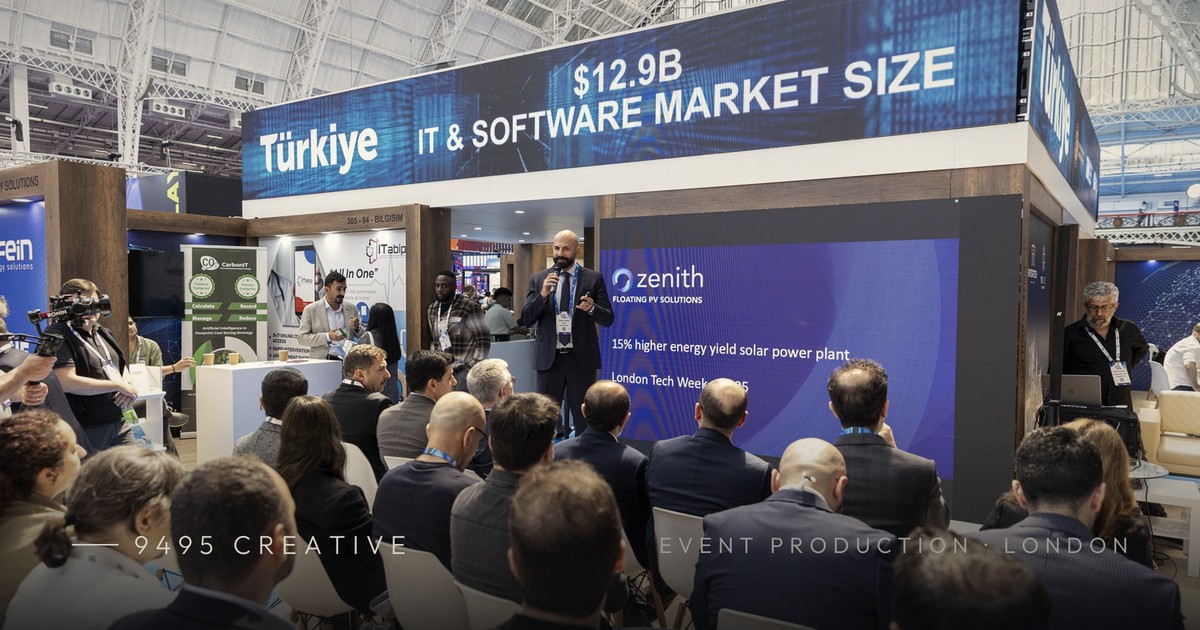
How much does hybrid event production cost in the UK? In 2026, budget from around £1,400–£2,800 for a single-camera, single-room hybrid event over a half-day, up to £18,000–£40,000+ for a multi-day, multi-track conference, excluding VAT. Most business events sit between those poles: a two-camera, vision-mixed full day with a director, an audio engineer and a properly managed stream typically runs £3,000–£6,500. What moves the number is crew count, camera count, how many rooms you stream at once, and whether you pay for redundancy.
“Hybrid event” covers an enormous range. It can mean a laptop on a tripod pointed at a speaker with a meeting link, or a four-room conference with a dedicated gallery, remote presenters dialling in from three time zones, and highlight edits published before delegates get home. Both are hybrid events. They cost an order of magnitude apart. Below is an honest, tiered breakdown of UK and London pricing so you can set a realistic budget before you ever ask a production company for a quote. If you are still shaping the format itself rather than the budget, our planner’s guide to hybrid event production is the companion read to this one. What this guide prices is the whole hybrid production: the in-room AV, the crew, the remote speakers, the redundancy and the recordings you keep afterwards, rather than the stream on its own.
How much does hybrid event production cost in the UK in 2026?
Here is a realistic tiered breakdown for the UK market in 2026. All figures are indicative GBP ranges excluding VAT, based on London-area crew and kit, and assume the venue supplies the room, power and a screen. Events outside London often quote slightly lower day rates, though travel, van hire and overnight accommodation usually claw the difference back.
| Tier | What you get | Typical UK cost (from) | Best for |
|---|---|---|---|
| Single-camera, single-room | One operated camera, audio split from the house PA, presenter laptop feed, one stream destination, one operator handling capture and stream, basic recording supplied afterwards | £1,400 – £2,800 (half day) | Staff briefings, AGMs, webinars, single-speaker sessions and training days |
| Two-camera + vision mix | Two cameras, vision mixer, switched presenter and slide feeds, branded holding slides and lower thirds, radio mics, director plus audio engineer, moderated on-screen Q&A, clean recording | £3,000 – £6,500 (full day) | Panel discussions, product launches, awards evenings, internal all-hands |
| Multi-camera, multi-track | Three to five cameras, comms system, two or more breakout rooms streamed in parallel, dedicated stream engineer, bonded internet and backup encoder, half-day rehearsal, on-site producer | £8,000 – £18,000 (per event day) | Conferences with breakouts, investor days, sponsor-funded and ticketed events |
| Multi-day conference | Full production build across two to four days, multi-room capture, presenter or virtual studio set, remote speaker management and pre-records, daily highlight edits, project manager from brief to delivery | £18,000 – £40,000+ | Flagship annual conferences, association congresses, festivals and summits |
Most UK organisations asking about hybrid event production are quietly picturing tier two. That is the point where a stream stops looking like a video call and starts looking like broadcast, which is why £3,000–£6,500 is typically where a single-day corporate event lands. What lifts an event from tier two to tier three is parallel rooms rather than camera count on its own: a third camera in a single room is a streaming question rather than a hybrid production one, and at £4,000–£8,000 for a three-camera streamed day it sits at the top of the tier two band rather than at the £8,000 floor above it. Our London event live streaming cost guide carries that stream-only ladder in full.
What drives hybrid event production cost up or down?
Two events in the same venue on the same day can differ in price by a factor of five. These are the levers that genuinely move the number:
- Crew count. This is the biggest single line on almost every hybrid quote. One multi-skilled operator is cheap but has no capacity for anything going wrong. A director, camera operators, an audio engineer and a stream engineer is four to six people, and UK crew day rates dominate the total long before the kit does.
- Camera count. Each additional camera adds hire, an operator or a robotic head, cabling time and a channel to mix. Going from one camera to two changes how the output looks more than any later addition does; going from two to five is about coverage of a large stage and audience, not polish.
- Streaming platform and destinations. Streaming to YouTube or LinkedIn is effectively free. Streaming to a gated, branded event platform with registration, analytics, chat moderation and sponsor stands is a licensed product with its own fee, often billed per event or per registered attendee.
- What the venue already provides. A conference centre with a house PA, a clean audio split, a decent screen and a hardwired line saves thousands. A hotel ballroom with no in-house AV means hiring PA, lighting, screens and a switch, which can add £1,500–£6,000 before a single camera is switched on.
- Rehearsal and set-up days. A set-up or rehearsal day is normally charged at 50–70% of a full production day. Skipping it is the most common false economy in the category.
- Redundancy. Bonded 4G/5G alongside the venue line, a backup encoder, a second recorder and spare radio mics typically add £400–£1,200 a day. On a paid or public-facing event, this is insurance, not luxury.
- Remote speakers and pre-records. Every presenter joining from elsewhere needs a connection test, a backup dial-in and, ideally, a recorded fallback. Budget roughly £150–£400 per remote speaker for testing, management and contingency.
If you want to understand what is actually in the flight cases behind those line items, our hybrid event AV equipment guide walks through the kit list tier by tier.
Half-day, full-day or multi-day: how does length change the price?
Duration does not scale the way people expect. A hybrid event has a large fixed cost that has nothing to do with how long the audience is in the room: load-in, rigging, cable runs, audio checks, stream tests, de-rig and travel. That block is typically three to five hours of paid crew time either side of the content, and you pay for it whether the event runs for ninety minutes or nine hours.
That is why a half-day is rarely half the price of a full day. A half-day hybrid event of £1,400–£2,800 at tier one becomes roughly £2,400–£4,500 for the same setup across a full day. At tier two, £3,000–£6,500 for one day becomes something like £5,000–£11,000 across two consecutive days, because the kit is already built and only the crew day is repeating.
Rule of thumb: a full day typically costs roughly 1.6–1.8 times a half-day rather than double, and each additional consecutive day adds about 60–75% of day one, because rigging, travel and de-rig are already paid for.
The practical consequence is worth acting on: if you are considering splitting content across two separate dates, check the cost of running them back to back in the same venue first. Two consecutive days is almost always cheaper than two standalone events a fortnight apart.
Length is also what sets your cost per head, which is usually the number that wins the budget internally. A £4,500 two-camera day watched live by 300 remote delegates is £15 a head for the remote audience, before a single view of the recording, and that fixed cost keeps dividing for as long as people watch it back. Compare it with what one seat in the room costs you once venue hire, catering and travel are counted. We are not going to publish a benchmark for that, because in-person cost per head swings far too much by venue and city to mean anything: use the numbers from your own last event.
Single-room or multi-track: what does a second stream actually cost?
A second simultaneous stream is not a small upgrade. It is close to a second event. Each parallel track needs its own cameras, its own audio, its own operator and its own encoder, plus a producer coordinating both so that the streams start, break and finish in step. In budget terms, a second streamed room typically adds 60–80% of the first room’s cost, and a third adds roughly the same again.
Multi-track is also where planning stops being optional. Session overruns in one room cascade into the other, remote attendees need a clear way to switch tracks, and someone has to be responsible for the master running order rather than each room individually. Our guide on how to live stream a conference covers the equipment and signal flow side of that, and how to run a hybrid event covers the run-of-show discipline that keeps the two audiences in sync.
If your programme genuinely has parallel tracks, one honest alternative is to stream the main room live and record the breakouts for publication a day or two later. That can cut £4,000–£8,000 from a conference budget while still giving remote delegates everything, just not everything at once.
What do streaming platforms and licensing fees add?
Platform cost is the line most often missed at budget stage, because production companies quote crew and kit while the platform sits on your side of the fence. Public destinations such as YouTube Live, LinkedIn Live and Facebook cost nothing to stream to, which is why they suit AGMs, launches and anything you want indexed and shared afterwards.
Gated and branded platforms are a different product. Expect roughly £500–£3,000 per event for a mid-tier virtual event platform with registration, a branded lobby, chat, polls and post-event analytics, rising well beyond that for large registration volumes, sponsor exhibition areas or multi-day access windows. Enterprise webinar tools billed annually may already sit in your organisation’s stack, so check with IT before buying anything new.
Two smaller items also belong in the budget. Music licensing applies if you use commercial tracks for walk-in, stings or highlight edits, so use properly licensed production music and keep the licence on file. And captioning, whether automated or by a live human captioner, is increasingly expected for accessibility. Budget from around £200 a day for automated captions and considerably more for a professional live captioner. For a closer look at where the streaming half of the budget goes on its own, see our breakdown of event live streaming costs in London.
What does recording, redundancy and post-event editing cost?
The live stream is only half of what you are buying. The recording is what your marketing team will still be using in six months, and it is often the cheapest content you will produce all year, because the crew and the cameras are already paid for.
- Isolated recordings: capturing each camera and the slide feed separately rather than only the mixed output, typically £150–£400 a day. Do this. It is what makes a proper edit possible later.
- Tidied full-session files: topped, tailed, colour-balanced, audio-levelled and branded, from around £200–£450 per session.
- Highlight film: a two to three minute event film cut from the day, typically £900–£2,500 depending on turnaround and whether you want interviews and B-roll shot alongside the stream.
- Social cutdowns: vertical clips and speaker soundbites, usually £80–£200 per clip in a batch, and often the highest-return item on this list.
- Same-day or next-day delivery: expect a 25–50% premium on edit costs for fast turnaround, since it means an editor working on site or overnight.
If you want the day to produce a genuine content library rather than a three-hour file nobody opens, plan the repurposing before the event, not after. Our guide to repurposing event footage into reels, shorts and clips shows how to brief that properly, and if you want a camera crew focused purely on the room rather than the stream, our event videography cost guide for London sets out those rates separately.
Why work with 9495 Creative?
At 9495 Creative, hybrid events are produced by our own in-house crew in London, and the same team that runs the stream also cuts the highlight film and the social clips afterwards. That matters more than it sounds: the camera positions, the audio and the isolated recordings are planned on day one around what the edit will need, rather than salvaged from a mixed output later. You get a single point of contact, a fixed scope in GBP, a site visit or technical call before we quote anything serious, and redundancy specified as standard rather than sold as an upgrade after something has already gone wrong.
Which hybrid event production setup is right for you?
Choose tier one if the content matters more than the production values and your remote audience is internal and forgiving. Choose tier two if the event is public-facing, has a panel or a stage, and will be watched by people who have never met you. Choose multi-camera or multi-track only when you genuinely have parallel content or a paying remote audience, and choose the multi-day build when the event is the flagship moment in your organisation’s year. There is no universally correct budget for hybrid event production, only the right fit for your audience, your stakes and your programme.
Ready to get a real figure for your event? Start a brief and tell us the venue, the date and how many rooms you need covered. We’ll come back with an honest scope, a fixed GBP price and a realistic timeline, with no vague agency waffle.
How do you compare two hybrid event quotes?
Two quotes for the same event can differ by thousands and both be honest, because they are quietly scoping different things. You cannot see that from a single all-in figure. Ask every supplier to show these five lines separately, then compare like with like.
- Crew, by role and headcount. Not “production team”: four named roles at four day rates, so you can see whether one person is covering camera, audio and the stream on their own.
- Kit and hire. Camera count, whether the second camera is operated or locked off, and what happens to PA and screens if the venue supplies none.
- Set-up and rehearsal. Included, or added later at 50–70% of a production day. This is the most common reason two quotes for the same brief are £1,500 apart.
- Redundancy. Bonded connection, backup encoder, second recorder, spare radio mics: in the price, or sold as an upgrade after something has already gone wrong.
- Deliverables. Isolated recordings or mixed output only, how many edited sessions, what turnaround, and who owns the files afterwards.
A single figure with no breakdown is the one to query, not automatically the one to reject. Send every supplier the same written brief so the quotes are answering the same question: our guides to writing a video brief and choosing a video production company in London cover how to structure it.
Frequently asked questions
How much does hybrid event production cost in the UK?
In 2026, hybrid event production in the UK typically costs from around £1,400–£2,800 for a single-camera, single-room half-day, and £2,400–£4,500 for that same setup across a full day. A two-camera, vision-mixed full day runs £3,000–£6,500. Multi-camera, multi-track conferences cost £8,000–£18,000 per event day, and full multi-day builds £18,000–£40,000+, all excluding VAT.
What is included in hybrid event production?
A standard hybrid event production package includes cameras and operators, a vision mixer, an audio feed from the venue PA or dedicated radio mics, branded graphics, an encoder and a managed stream to your chosen platform, plus a recording afterwards. At £3,000–£6,500 for a two-camera full day you should also expect a director, on-screen Q&A moderation and a rehearsal window before doors open.
How much does a half-day hybrid event cost?
A half-day hybrid event with one camera, an audio split from the house PA and a single stream destination typically costs £1,400–£2,800 excluding VAT. It is rarely half the price of a full day, because load-in, rigging, audio checks, stream tests and de-rig are fixed costs regardless of runtime. Expect the same setup across a full day to cost £2,400–£4,500.
How much does hybrid event production cost for a multi-track conference?
Multi-track hybrid event production, where two or more rooms stream in parallel, typically costs £8,000–£18,000 per event day in the UK, rising to £18,000–£40,000+ for a full multi-day build. Each additional streamed room adds roughly 60–80% of the first room’s cost, because it needs its own cameras, audio, operator and encoder, plus a producer coordinating the tracks.
Do I need a rehearsal day for a hybrid event?
For anything above a single-camera briefing, yes. A rehearsal or set-up day is normally charged at 50–70% of a full production day, so roughly £1,500–£4,500 at the two-camera tier. It buys stream tests, remote speaker connection checks, audio levels and a walk-through of the running order, and skipping it is the most common false economy in hybrid budgets.
How much does live event production cost in London?
In London, a single-camera streamed or hybrid event day starts at around £1,400–£2,800 for a half day and £2,400–£4,500 for a full day. A two-camera, vision-mixed day is £3,000–£6,500, multi-track conferences £8,000–£18,000 per event day, and full multi-day builds £18,000–£40,000+. All exclude VAT and assume the venue supplies the room, power and a screen.
2 comments