
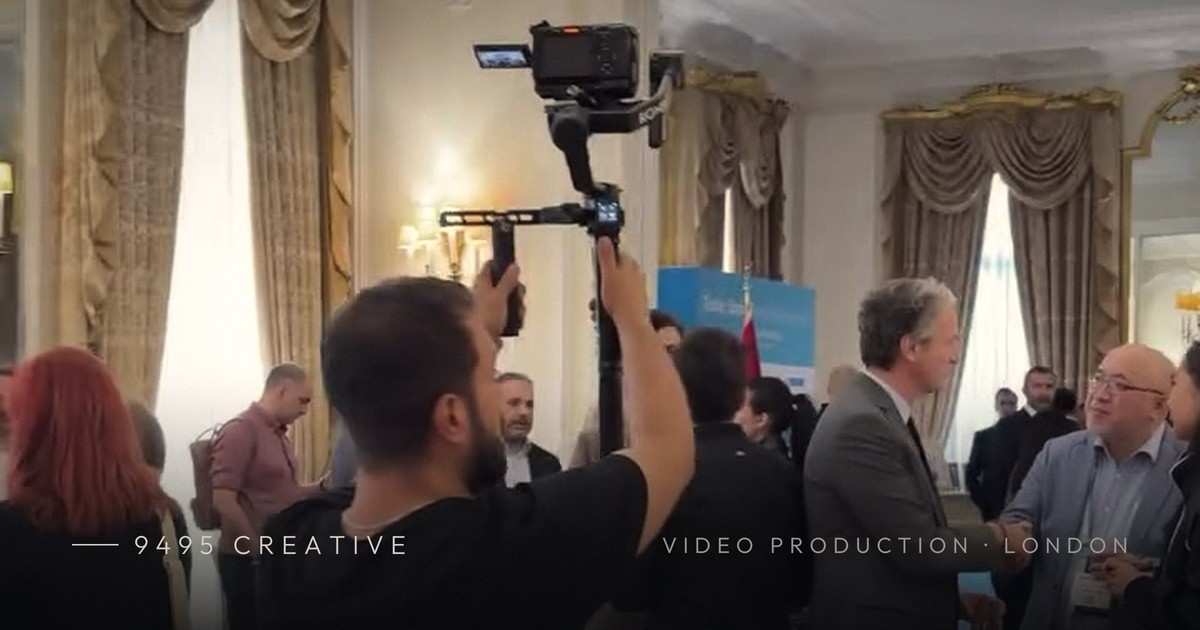
Corporate video production cost in London typically runs from around £3,000 for a single-location interview or talking-head piece, £6,000–£15,000 for a scripted promotional film with a small crew and one shoot day, and £12,000–£25,000 for a director-led brand film with a larger crew and full post-production. Price is driven mainly by shoot days, crew size, and the depth of editing, motion graphics and sound design — not by video length.
That is the short answer. The longer answer is worth reading, because “corporate video” covers everything from a two-hour founder interview to a cinematic 90-second brand film, and the gap between those two briefs is thousands of pounds. Below is an honest, London-anchored breakdown of what you are actually paying for in 2026, where the money goes, and how to brief so your quote comes back accurate rather than optimistic. All figures are ex-VAT ranges; the standard UK VAT rate of 20% applies on top for most buyers.
How much does corporate video production cost in the UK?
Most standalone UK corporate video projects land between £3,000 and £30,000, with the majority of business-grade films sitting in the £6,000–£18,000 band. Individual formats bought as a batch or a series, such as training modules, testimonials and social cutdowns, start lower at around £1,500, as our breakdown of the ten types of corporate video sets out. The number depends far more on production values than on how many seconds appear on screen. A polished 60-second promo can cost more than a 10-minute internal training video, because the promo demands a director, a lit set, a crafted script and a colour grade, whilst the training film may be a locked-off camera and a clean edit.
Here is how the ranges break down by the kind of video most London businesses actually commission:
| Video type | Typical London cost (ex-VAT) | What you get |
|---|---|---|
| Single interview / talking head | from £3,000 | Half-day shoot, one location, one or two cameras, clean edit |
| Promotional / product video | £6,000–£15,000 | Scripted, one shoot day, small crew, graphics and licensed music |
| Brand film (director-led) | £12,000–£25,000 | Director-led, one to two shoot days, cast or talent, full grade and sound design |
| High-production campaign film | £25,000+ | Larger crew, multiple locations or sets, advanced post and motion graphics |
These are ballpark bands, not a menu. The moment you add a second location, a presenter, drone work or animated data visualisations, you move up a tier. That is normal and it is not agencies being greedy — each of those elements is a real line item with real people behind it.
What actually drives the cost of a corporate video?
Six variables account for almost every pound in a video production quote. Understanding them lets you flex your budget deliberately rather than being surprised by it.
- Shoot days. The single biggest lever. Each additional day adds crew, kit, location and catering costs. Consolidating your shots into one well-planned day is the fastest way to control budget.
- Crew size. A one-person shooter is very different from a director, DoP, gaffer, sound recordist and production assistant. Bigger crews buy you better light, cleaner audio and a calmer set — but each role is a day rate.
- Pre-production. Scripting, storyboarding, casting, location scouting and scheduling. Skimping here is a false economy; it is where a good film is actually won.
- Talent and locations. Professional presenters, actors and paid-for London locations all carry fees and usage terms. Using your own staff and premises keeps costs down.
- Post-production. Editing, colour grading, sound design, motion graphics and revisions. Heavy animation or complex data visualisation can rival the shoot in cost.
- Deliverables and usage. One master edit is one price. A master plus vertical cut-downs for Instagram Reels and TikTok, subtitled versions and paid-media licensing is more work — and worth budgeting for upfront.
What are the hidden costs of video production?
The line most likely to blow a budget is the one nobody mentioned at briefing. The genuinely reputable agencies quote these upfront; the cheaper “from £X” numbers often quietly exclude them. Watch for:
- Music licensing. A production-library track licensed for online use runs from a few pounds to around £150; the same track cleared for paid advertising costs more again, and bespoke composition starts at roughly £500 to £1,500. A recognisable commercial track can cost more than the entire edit, which is why most professional films use library music with clear commercial licences — budget for it rather than assuming it is free.
- Usage and media rights. Running the film as a paid ad, on billboards or beyond an agreed term triggers additional licensing for talent and music. A paid-media buyout for someone whose face appears in the ad commonly adds £300 to £800 per person on top of their shoot fee, as our promo video cost guide sets out.
- Revisions beyond the agreed rounds. Most quotes include two or three rounds of edits. Round three or four onwards is billed at the editor’s hourly rate, so budget roughly £150 to £500 per extra round on a short corporate film — see our video editing rates guide. Endless internal changes are chargeable, which is why sign-off discipline matters.
- Captions, versioning and localisation. Burnt-in English captions typically run £5 to £15 per finished minute, every extra aspect ratio is a reformat rather than an export, and a vertical cutdown built from your existing master is a small edit in its own right at £150 to £400 per finished cut through a studio. Language variants are separate deliverables again.
- Travel, permits and insurance. Borough filming fees are published and vary widely: Richmond upon Thames charges £90 a day in on-street filming admin for a crew of one to six in its 2026/27 schedule, while Kensington and Chelsea’s 2024/25 fees put a notice of no objection for a crew of up to five at £94, with a £78 film parking permit and £72 per suspended parking bay per day on top. Add public-liability cover and crew travel.
- Rush turnaround. Same-week delivery usually carries a 25% to 50% premium, because it means evenings, weekends or bumping another client’s edit down the queue. If your launch date is fixed, say so at briefing rather than at the edit stage.
None of these are traps if they are on the quote. The question to ask any supplier is simply: “What is not included in this figure?” A straight answer tells you a great deal about who you are dealing with.
How long does a corporate video take to produce?
For a standard promotional or brand film, budget four to eight weeks from brief to final delivery: roughly one to two weeks of pre-production, a shoot day, and two to four weeks of post-production including your revision rounds. The most common cause of delay is not the crew — it is client-side approval speed. Scripts, edits and final sign-off that sit in an inbox for a week each will stretch any timeline. At 9495 Creative we return a visual treatment and strategy proposal within five business days of a brief, so you know the creative direction and the number before you commit.
Why does London video production cost what it does?
London day rates sit at the higher end of the UK market because the talent pool, kit hire and location costs are premium. That is the trade-off for access to experienced directors, broadcast-grade equipment and crews who can problem-solve on a live set. A cheaper regional quote can be excellent value; it can also mean a smaller crew, less pre-production and a junior editor. Neither is wrong — the point is to match the spend to the job. A recruitment film for internal use does not need a campaign budget. A hero brand film that will front a national push should not be shot on the cheapest option available.
In numbers: the single-location corporate film that starts at about £3,000 in London often quotes nearer £2,000 to £2,500 in Manchester, Leeds or Bristol for a like-for-like brief — roughly a fifth to a third less. The gap is crew day rates, kit hire and location costs, not a London tax. It closes fast, though, once you add travel, accommodation and a lost half-day to the schedule, so the saving is usually real only when the shoot is genuinely local to the supplier.
The right question is never “what is the cheapest video?” but “what is the smallest budget that still does this job properly?”
How to get an accurate video production quote
Vague briefs produce vague quotes and expensive surprises. To get numbers you can trust, tell your supplier: the single goal of the film, where it will run (website, paid social, event, internal), the deliverables and formats you need, your deadline, and your realistic budget range. Sharing the budget is not a weakness — it lets a good agency design the best possible film for the money rather than guessing and padding.
This is where 9495 Creative works differently. We are a London studio with fully in-house directors and strategists — no stock templates, no outsourcing, and cinema-grade craft on every project. Because the people who plan your film are the people who shoot and edit it, the treatment you approve is the film you receive, and the quote reflects the real work rather than a headline figure with asterisks. You can see the range of what that looks like across our portfolio, or read more about our video production services.
Should you hire a freelance videographer or a production company?
Both are legitimate choices, and the honest test is what the film has to do. A freelance videographer is a person; a production company is a process. At the same £3,000 excluding VAT you are buying quite different things.
| What you are buying | Freelance videographer | Production company |
|---|---|---|
| Crew | One person shooting, directing and editing | Two to three on the day, plus a producer off it |
| Kit | Owned camera and a small lighting and sound kit | Owned plus hired: cinema camera, full lighting, radio mics |
| Pre-production | A call and a shot list | Brief, script, treatment, recce and schedule |
| Insurance and permits | Check they hold public liability; permits usually your job | Public liability, kit insurance and permits handled |
| Revisions | Informal, often generous, occasionally slow | Two rounds written into the quote |
| If someone falls ill | The shoot moves | The shoot is recrewed |
For an interview series, an event film or a run of social content, a good freelancer is often the better value and the faster call. For a film that has to sell something, survive a committee and land on a deadline, the production-company overhead is what you are actually paying for. The questions that separate a good supplier from a cheap one are set out in our guide to choosing a video production company in London, and writing a proper brief first — covered in how to write a video brief — is what makes the two quotes comparable at all.
Frequently asked questions
How much does a corporate video cost in London?
A corporate video in London typically costs from around £3,000 for a single-location interview, £6,000–£15,000 for a scripted promotional film, and £12,000–£25,000 for a director-led brand film. Cost is driven by shoot days, crew size and post-production depth rather than video length. All figures are ex-VAT.
Why is corporate video production so expensive?
Most of the cost is skilled people and time, not equipment. A quote pays for pre-production (scripting, casting, scheduling), a crew on the shoot day, and post-production (editing, colour grading, sound design and revisions). London day rates sit at the higher end of the UK market because of the talent and kit available.
What are the hidden costs of video production?
The costs most often left off cheap quotes are music licensing, usage and media rights for paid advertising, extra revision rounds beyond those agreed, subtitles and vertical reformats, plus travel, filming permits and insurance. Always ask a supplier what is not included in their figure.
How long does it take to produce a corporate video?
Budget four to eight weeks from brief to final delivery for a standard promotional or brand film: one to two weeks of pre-production, a shoot day, and two to four weeks of post-production including revisions. The most common delay is client-side approval speed, not the production crew.
How do I get an accurate video production quote?
Share the film’s single goal, where it will run, the deliverables and formats you need, your deadline and a realistic budget range. Giving a budget lets a good agency design the best film for the money rather than padding a guess. 9495 Creative returns a visual treatment and proposal within five business days.
How much does video production cost in the UK?
A single-location corporate film costs £2,000 to £6,000 excluding VAT across the UK and starts at around £3,000 in London. A scripted film with a small crew, one to two shoot days and full post-production runs £6,000 to £15,000. Editing footage you already own into social cutdowns is far cheaper, at £150 to £400 per finished cut.
Is video production cheaper outside London?
Usually yes, by roughly a fifth to a third on a like-for-like brief. The single-location film that starts at about £3,000 in London often quotes nearer £2,000 to £2,500 in Manchester, Leeds or Bristol, because crew day rates, kit hire and locations cost less. That saving shrinks quickly once travel and accommodation are added.
Should I hire a freelance videographer or a production company?
For a straightforward interview, event film or run of social content, a freelance videographer at around £3,000 buys a shoot day and an edit, and that is often enough. A production company puts a two to three person crew, a producer, insurance, permits and a written revision process behind the same money, which matters when the film has to sell something.
Ready to budget your project properly?
The honest answer to “how much does a corporate video cost” is “tell us the job and we will tell you the number” — and we will do it within five business days, with a visual treatment attached so you can see exactly what you are buying. Start a brief and we will send you a clear, itemised proposal with no hidden lines. Your brand, your story, priced properly.
12 comments